*|PREVIEW|*

Died 26 August 1968

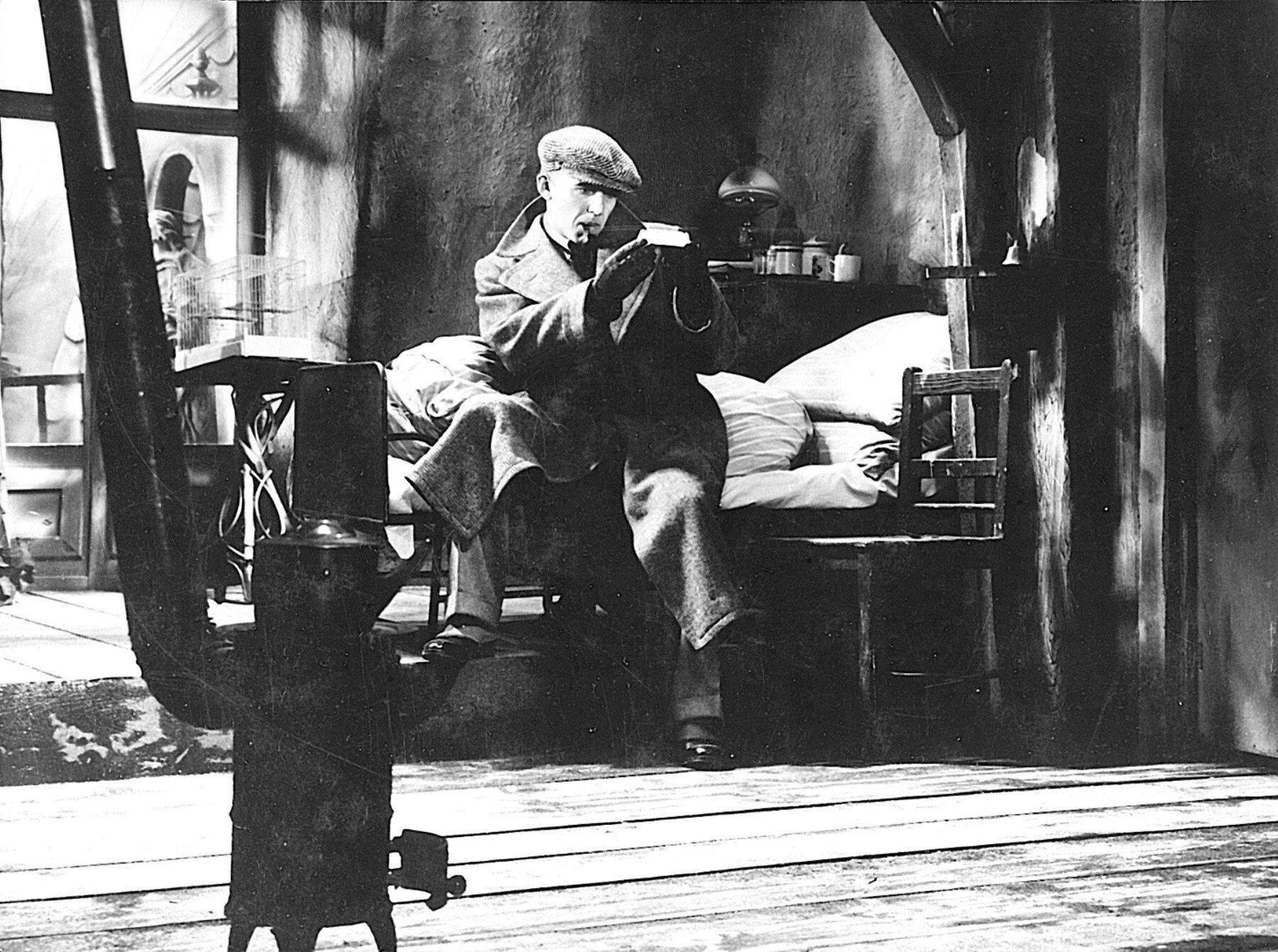
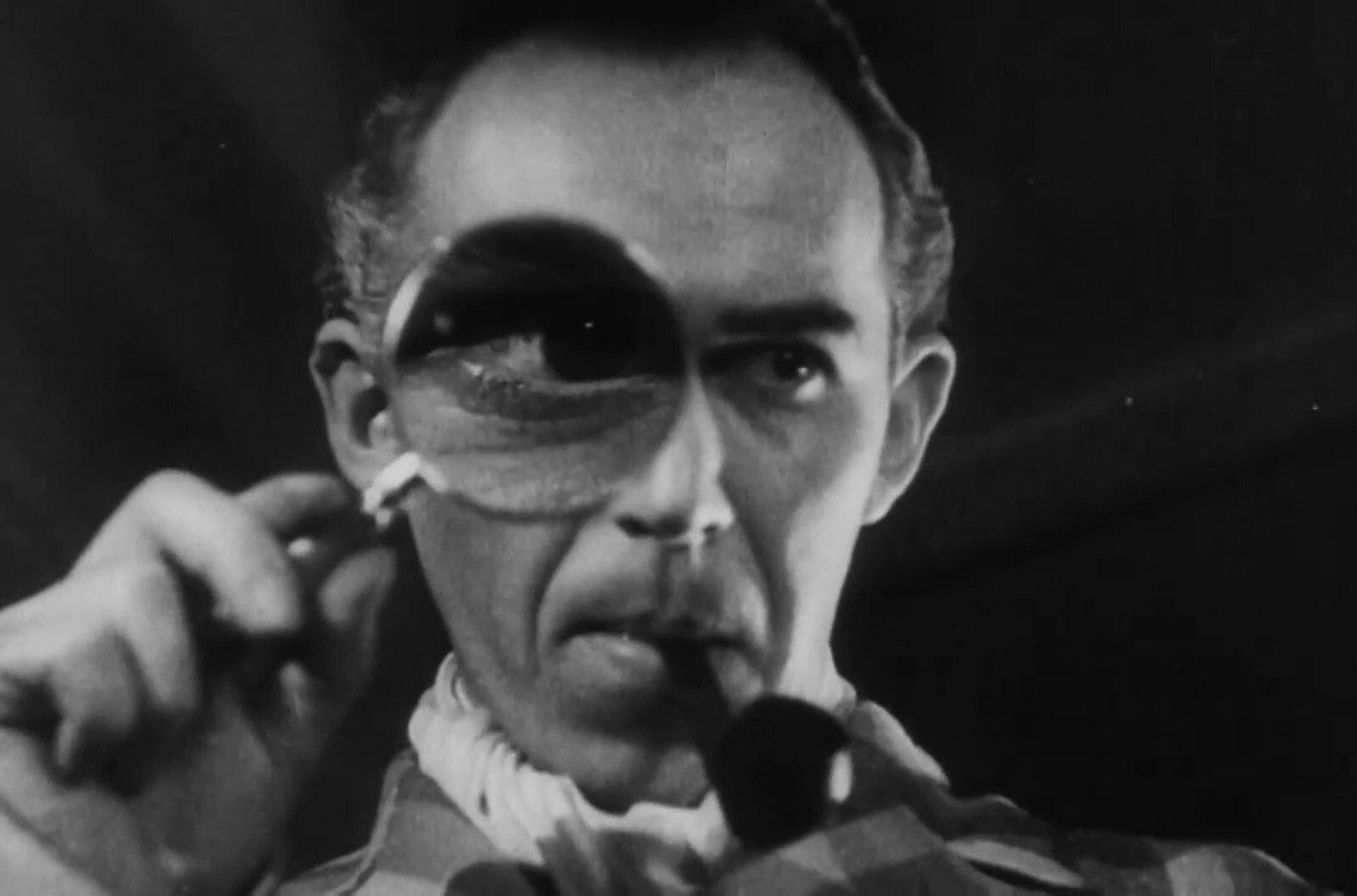
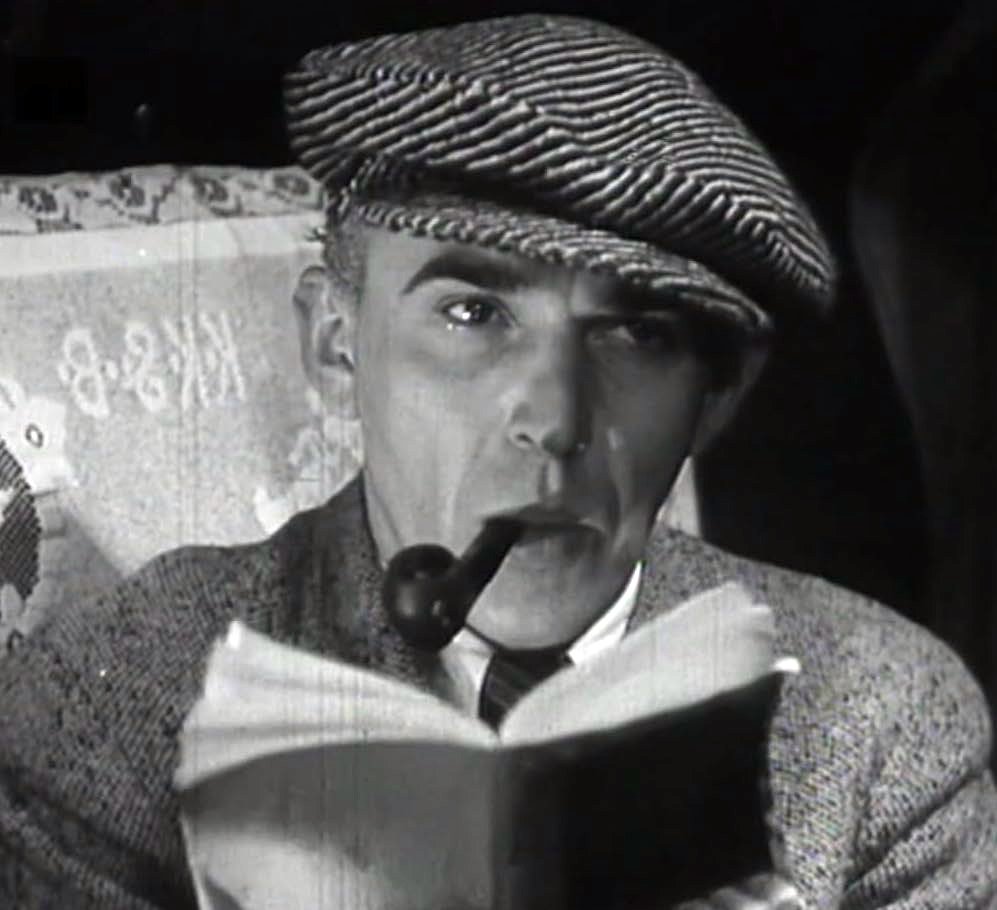
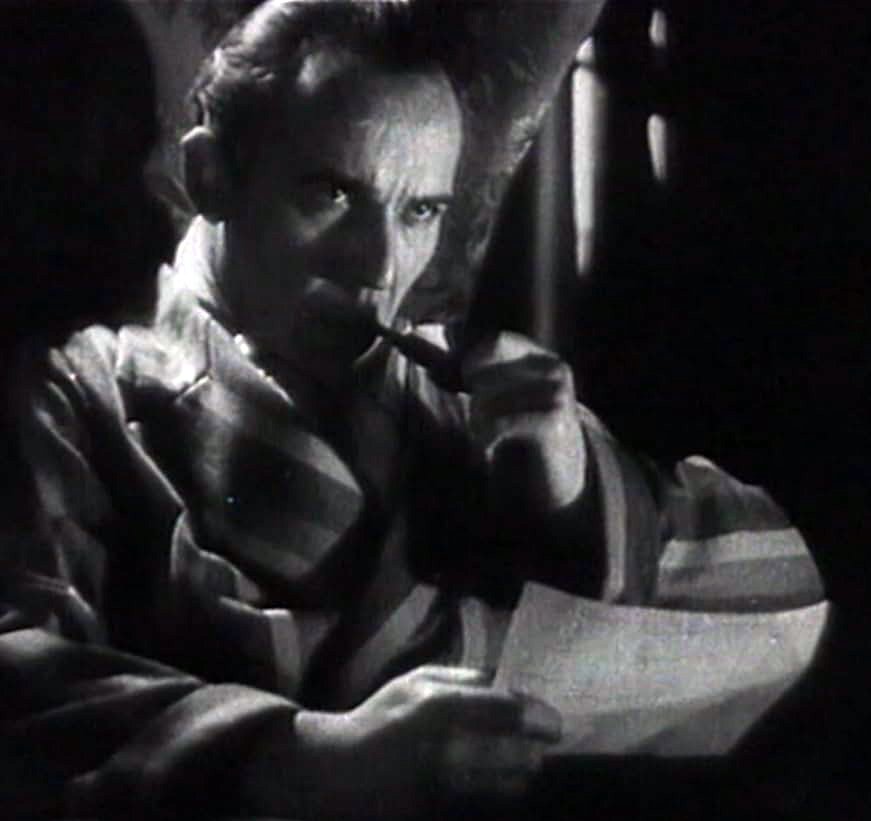
 Martin Frič was Berlock Sholmès

in the French film

Le Roi Bis in 1932

by Thierry Saint-Joanis

On 26 August 1968, Martin Frič (born 29 March 1902), the Czechoslovak director, screenwriter and actor, died. In 1932 he played Sherlock Holmes in the Czech film Lelícek ve sluzbách Sherlocka Holmese. This unpronounceable title stands out in Anglo-American Sherlock Holmes filmographies, which indeed took years to provide a description of this “Sherlock Holmes film” lost among the classics of its era. It is a fine example of the limitations of filmographies compiled by our colleagues across the Atlantic and the Channel, who are often at a loss when a Sherlockian film is neither American nor British. What could be said about a film shown in Czech cinemas in 1932? For a long time, nothing. And when the information was finally shared, it remained incomplete, because—believe it or not—behind this Czech film with its unpronounceable title lay another Sherlockian film, a French one entitled "Le Roi Bis". And Martin Frič plays Conan Doyle's detective in that film too. Let us discover it today...


In Lelíček ve službách Sherlocka Holmesa (Lelíček in the Service of Sherlock Holmes), actor Martin Frič plays Sherlock Holmes. The Czechoslovak production company Elekta Film presented this eighty-eight-minute film on 25 March 1932. Directed by Carl Lamac, it starred Vlasta Burian, Martin Frič, Fred Bulín, Lída Baarová, Eva Jansenová, Theodor Pištek, Čeněk Šlégl and Eman Fiala. It was released in the United States in 1939.

It is an original comedy inspired by the literary work of the same name by Czech author Hugo Vavrečka. Sherlock Holmes is therefore played by Martin Frič, primarily a director but also an occasional actor with a passion for detective fiction. Holmes, portrayed with sardonic irony, teams up with the main character, the resourceful František Lelíček (Vlasta Burian). Crushed by debt, he agrees to become the double of the king of Porto-Rico, Fernando XXIII. In the end, Lelíček obtains a royal position as well as the favours of the queen (Lída Baarová).

Director Karel Lamac had an interest in Conan Doyle that he would later confirm with his adaptation of The Hound of the Baskervilles, filmed in Germany in 1937 under the title Der Hund von Baskerville.

As a side note, actor Eman Fiala, who plays the composer in Lelíček ve službách Sherlocka Holmesa, was the first actor to play Sherlock Holmes in a Czech film, the comedy Únos bankéře Fuxe in 1923.

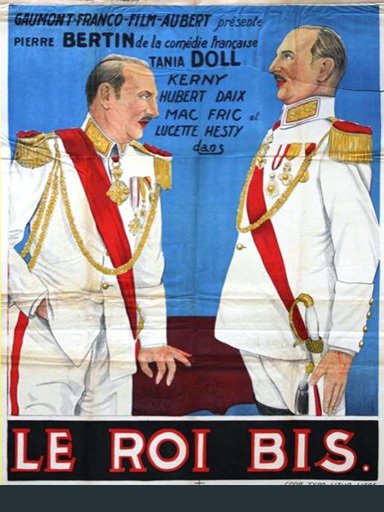
What was long unknown in Sherlockian circles is that, alongside this Czech film, a French version was filmed simultaneously, entitled Le Roi Bis, again with Frič as the detective, with one small difference: here he is called Berlock Sholmès.

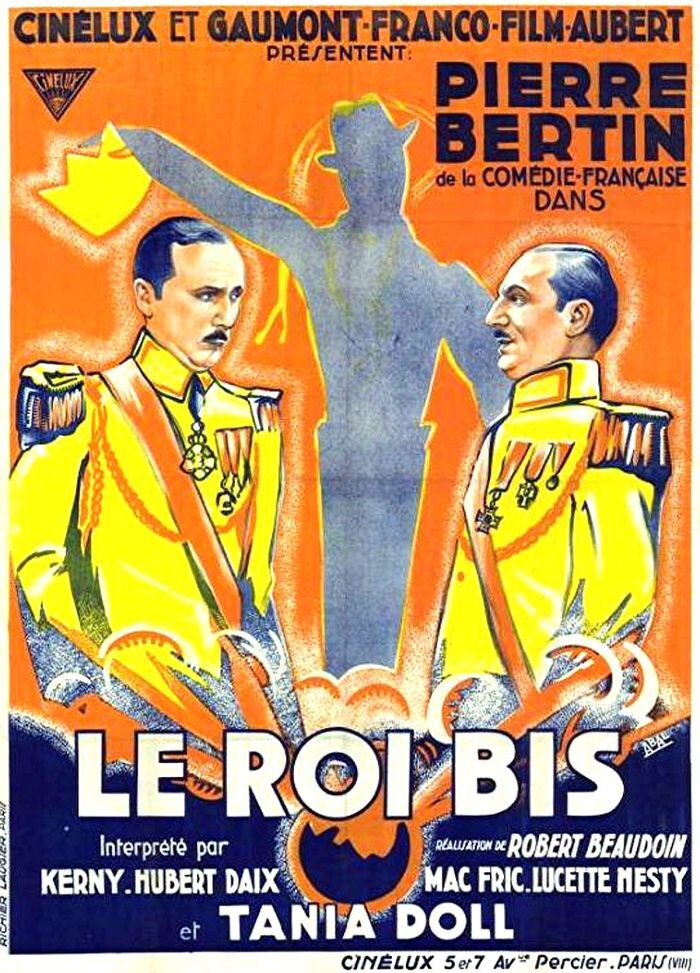
Gaumont produced and distributed this feature film on 23 December 1932. It was directed by the Frenchman Robert Beaudoin. The cast therefore includes Martin Frič (often credited under the pseudonym Mac Fric or Mac Frich as Berlock Sholmès), alongside Pierre Bertin (King Fernando XXIII and Leducq), Truda Grosslichtová, under the name Tanja Doll (the queen), Henri Kerny (the chamberlain), and Hubert Daix (the Prime Minister).

In the French version of the film, presented as a “hilarious comedy”, King Fernando XXIII of Puerto-Néro, feeling unequal to his public duties, hires a detective to find him a double capable of taking his place. Leducq, a humble Parisian street vendor, takes his place and becomes the queen's lover, while he himself believes her to be a double as well.

This theme of role reversal is typical of 1930s cinema: a figure of authority and a man of the people see their hierarchical positions reversed.

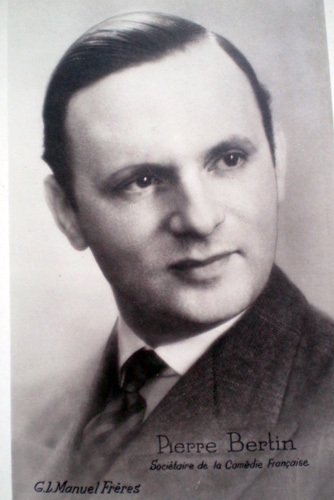
Here, Pierre Bertin, a member of the Comédie-Française, is the star of the film.

It is worth noting that the film was shot in fifteen days in Prague with the two Czech stars (Frič and Doll), who were then unknown in France. Is that why the critics overlooked the presence of Sherlock Holmes?

In the January 1933 issue of the magazine Cinémagazine, one can read: “Some may remember the American film Le Roman d'un roi, which was a great success in its day? Dramatically speaking, it was exactly the same situation as Le Roi Bis. The film by Messrs Beaudouin and Chemel is handled with good humour. The general tone is one of frank gaiety. Some passages are genuinely witty; others are a little broad in their humour. But the whole is decidedly entertaining. The direction is careful; Pierre Bertin's performance in his two roles is remarkable.”

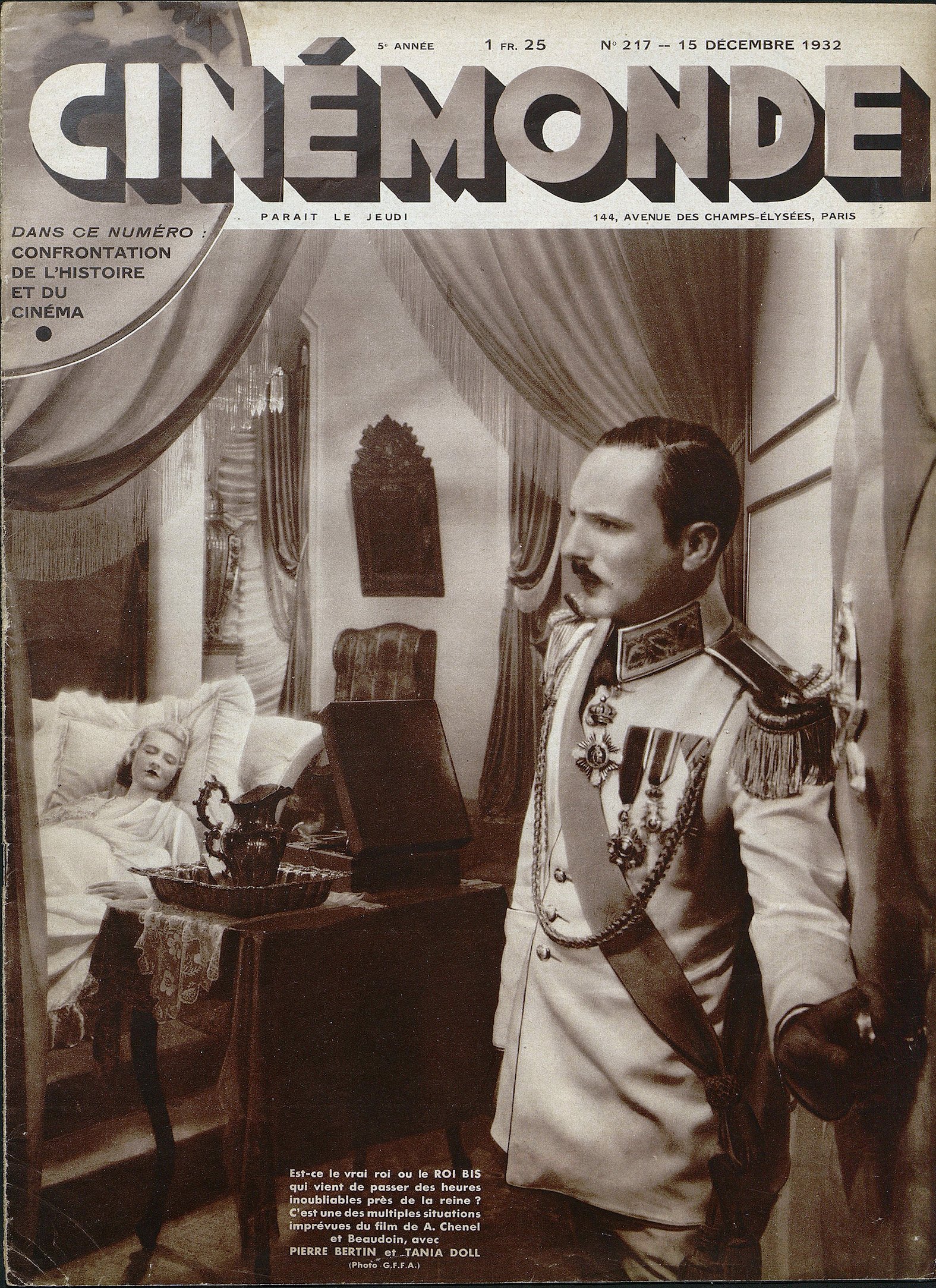
In issue No. 217, dated Friday 2 December 1932, of Bordeaux Ciné, we read: “This burlesque comedy directed by R. Beaudouin and A. Chemel (dialogue by Jacques Deval) is based on a substitution of identities in a small, imaginary and traditional court. It contains caricatural and comic elements, giving it the tone of a cheerful farce that will certainly be very popular. A good Frenchman, Leduc, who bears an uncanny resemblance to King Fernando of Puerto-Nero, is hired as the king's double and must expose himself in his place to the bombs and attacks scattered along the sovereign's path. Whereas the real king is carefree and ridiculous, the double is courageous, frank and cheerful. He escapes every attack, seduces the Queen, his temporary wife, and when the real King dies in an accident, he reigns in his place over a kingdom that, thanks to him, enters an era of prosperity. Pierre Bertin gives a double performance full of imagination, at one moment weak and senile as the king, at another swaggering and comically popular as the double. Kerny and Hubert Daix are amusing. Tania Doll is pretty. Of particular note are the reception, bomb and bullfight scenes, all handled with great gaiety.”

And Sherlock Holmes? Fortunately, Cinémonde will tell us about him...


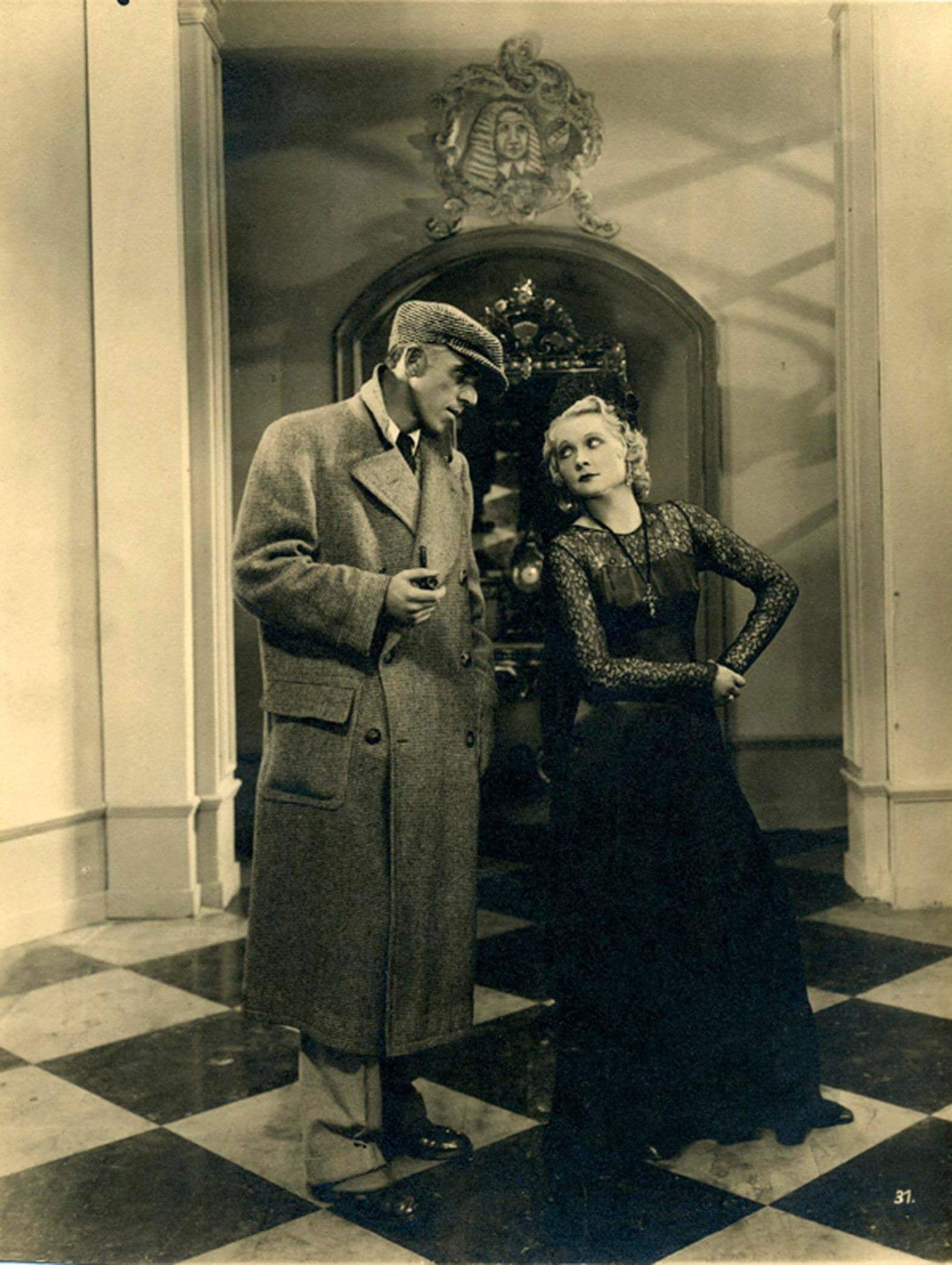
Martin Frič and Truda Grosslichtová (Tanja Doll). 

“The detective shows great authority and has a handsome, serious face.” (Cinémonde No. 218, 22 December 1932)

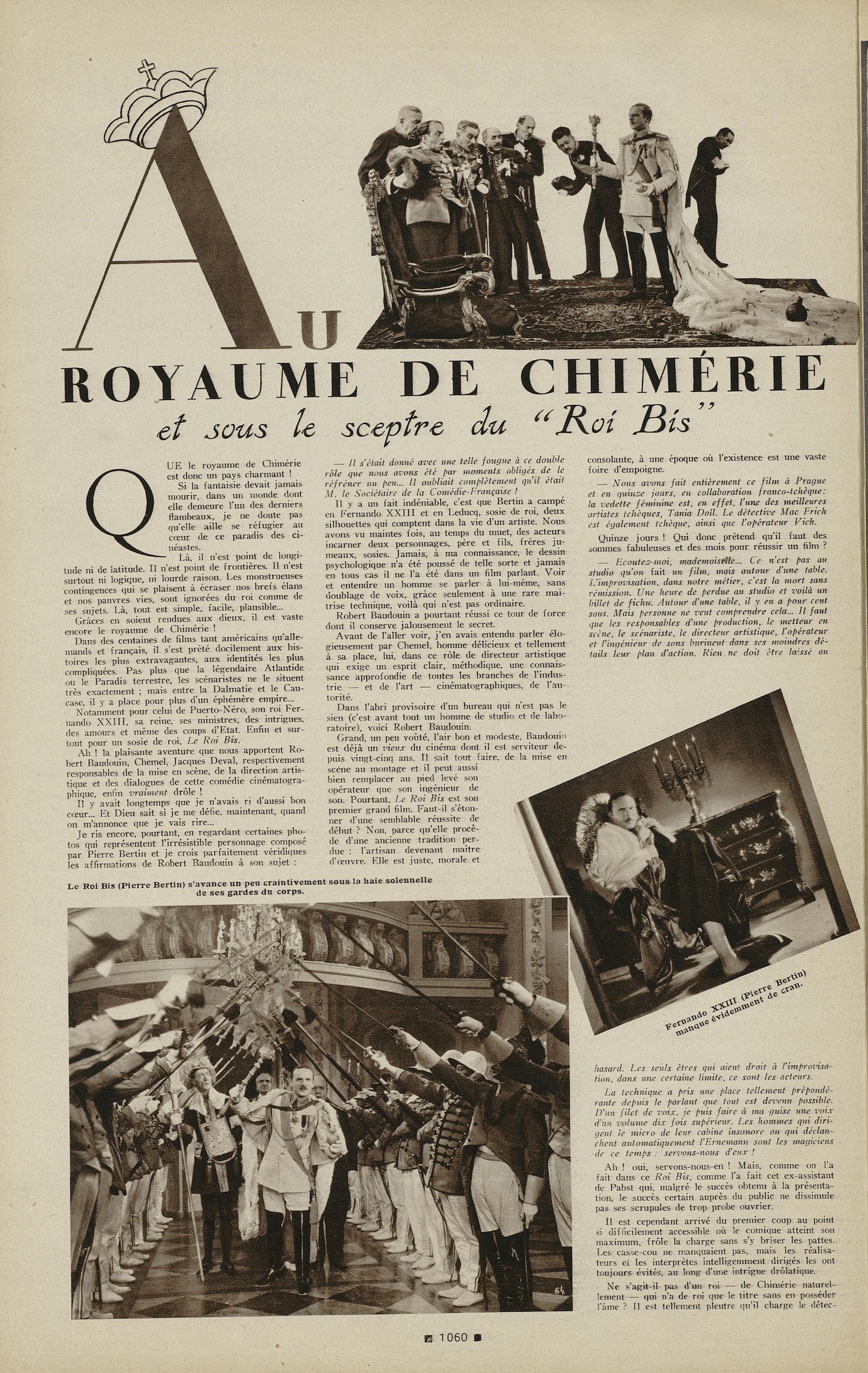
In the kingdom of Chimeria

and under the sceptre of “Le Roi Bis”

What a charming country the kingdom of Chimeria is!

If fantasy were ever to die, in a world where it remains one of the last torches still burning, I have no doubt that it would take refuge in the heart of this filmmakers' paradise.

There, there is neither longitude nor latitude. There are no borders. Above all, there is neither logic nor ponderous reason. The monstrous contingencies that delight in crushing our brief impulses and our poor lives are unknown to the king and his subjects alike. There, everything is simple, easy, plausible...

Thanks be to the gods, the kingdom of Chimeria is still vast!

In hundreds of American, German and French films, it has obediently lent itself to the most extravagant stories and the most complicated identities. No more than legendary Atlantis or the Garden of Eden do screenwriters locate it very precisely; but between Dalmatia and the Caucasus there is room for more than one ephemeral empire...

Especially for Puerto-Néro, its King Fernando XXIII, its queen, its ministers, intrigues, love affairs and even coups d'état. And above all, for a king's double. Le Roi Bis.

Ah! What a delightful adventure Robert Baudouin, André Chemel and Jacques Deval bring us, respectively responsible for the direction, art direction and dialogue of this film comedy—at last, a genuinely funny one!

It had been a long time since I had laughed so heartily... And heaven knows how wary I am now when I am told that I am going to laugh...

Yet I still laugh when I look at certain photographs of the irresistible character created by Pierre Bertin, and I fully believe Robert Baudouin's statements about him: “He threw himself into this double role with such gusto that at times we had to rein him in a little... He completely forgot that he was Monsieur the Member of the Comédie-Française!”

One thing is undeniable: as Fernando XXIII and Leducq, the king's double, Bertin created two characterisations that count in an artist's career. Many times in the silent era we saw actors play two characters—father and son, twin brothers, doubles. Never, to my knowledge, was the psychological distinction carried so far, and certainly never in a talking film. To see and hear a man talking to himself, without voice dubbing, thanks solely to rare technical mastery, is no ordinary thing.

Robert Baudouin nevertheless achieved this tour de force, whose secret he jealously guards. Before going to see him, I had heard Chemel speak highly of him—Chemel, a delightful man and so perfectly suited to the role of art director, which requires a clear, methodical mind, a thorough knowledge of every branch of the film industry—and art—and authority.

In the temporary shelter of an office that is not his own (he is above all a studio and laboratory man), here is Robert Baudouin.

Tall, slightly stooped, kind and modest in appearance, Baudouin is already an old hand in cinema, which he has served for twenty-five years. He can do everything, from directing to editing, and can just as readily stand in at a moment's notice for his cameraman as for his sound engineer. And yet... Le Roi Bis is his first major film. Should one be surprised by such a successful debut? No, because it springs from an old, lost tradition: the craftsman becoming master builder. It is just, moral and consoling in an age when existence is one vast free-for-all.

“We made this film entirely in Prague and in fifteen days, as a Franco-Czech collaboration: the female star is in fact one of the best Czech actresses, Tania Doll. The detective Mac Frich is also Czech, as is the cameraman Vich.”

Fifteen days! Who claims that fabulous sums and months are needed to make a successful film?

“Listen to me, miss... A film is not made in the studio, but around a table. Improvisation, in our profession, is death without reprieve. Lose an hour in the studio and there goes a banknote. Around a table, it costs a few pennies. But no one wants to understand that... Those responsible for a production—the director, screenwriter, art director, cameraman and sound engineer—must chisel their plan of action down to the smallest detail. Nothing must be left to chance. The only people entitled to improvise, within certain limits, are the actors.

Technique has taken such a dominant place since the advent of sound that anything has become possible. From a mere thread of a voice I can create, at will, one ten times louder. The men who control the microphone from their soundproof booth or automatically set the Ernemann in motion are the magicians of our time: let us make use of them!”

Ah yes, let us make use of them! But as they were used in this Roi Bis, as this former assistant to Pabst has done; despite the success achieved at the preview and the certain success with the public, he does not conceal the scruples of an overly conscientious craftsman.

Yet at his first attempt he reached that so difficult point where comedy attains its maximum effect, brushing against caricature without breaking its legs on it.

There were plenty of pitfalls, but the director and intelligently guided performers avoided them throughout a farcical plot.

Is it not about a king—of Chimeria, naturally—who has only the title of king without possessing the soul of one? He is so cowardly that he instructs Detective Berlock Sholmès to find him a double who can replace him in the dangerous duties of his profession.

This double is found by Sholmès : his name is Leducq; he is a street hawker and suspender seller in Paris.

The detective quickly persuades him to accompany him to Puerto-Néro. Thanks to his efforts, combined with those of the prime ministers, Leducq is taught the customs of the Chimerian court and, when the time comes to replace Fernando XXIII, he appears before the people in all his glory.

The psychological evolution of this Parisian hawker, fictitiously transported to the head of a kingdom, gives rise to scenes that are impossible to resist because they are so spontaneously funny. Let us say at once, without diminishing Baudouin's merit in any way, that Pierre Bertin leads the game with incomparable finesse and mastery.

He is exuberant, however extraordinary that adjective may seem when applied to a member of the noble House!

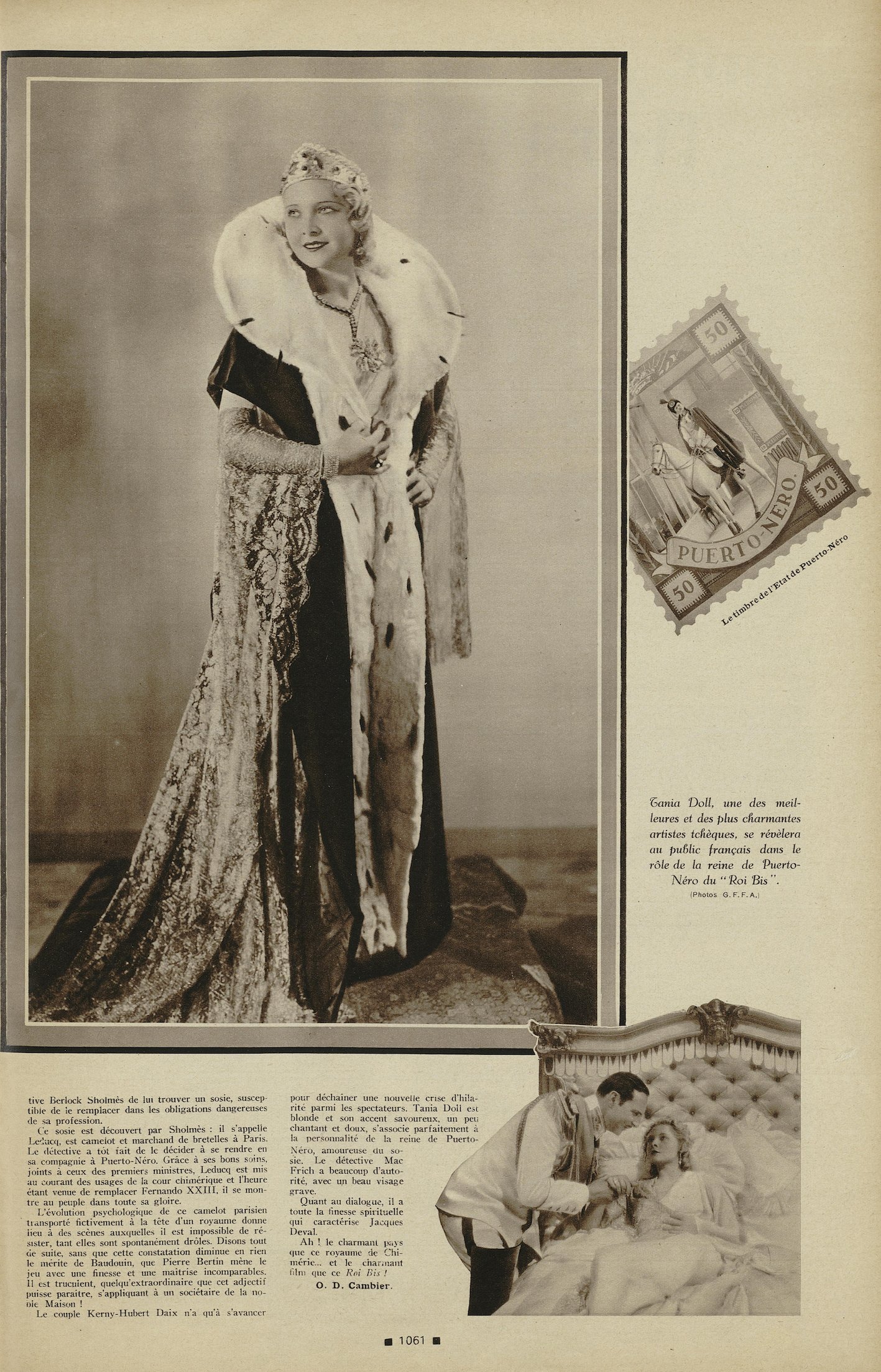
The mere appearance of the Kerny–Hubert Daix pair is enough to trigger another fit of laughter among the audience. Tania Doll is blonde, and her charming, slightly lilting and gentle accent perfectly suits the personality of the queen of Puerto-Néro, who falls in love with the double. The detective Mac Frich has great authority and a handsome, serious face.

As for the dialogue, it has all the witty finesse characteristic of Jacques Deval.

Ah! What a charming country this kingdom of Chimeria is... and what a charming film Le Roi Bis is!

O. D. Cambier


Note: Odile D. Cambier was a French journalist, film critic and interviewer particularly active during the 1930s.

Pierre Bertin on the cover of issue No. 217 of Cinémonde.

Quiz 2026 - No. 92

Answer the following question.

To take part, send your answer

together with your name.

by email

to doyly-planet@sherlock-holmes.fr

You may answer until the solution

has been revealed in The Doyly Planet.

Riddle “The Empty House”

8 points for the correct answer

The adventure of The Empty House takes place in April. What natural element, already mentioned in The Adventure of the Speckled Band, confirms this date?


The adventure of The Empty House takes place in April. What natural element, previously mentioned in The Adventure of the Speckled Band, confirms this date?

Space, the final frontier...

The events of the day (BOSC)

26 August

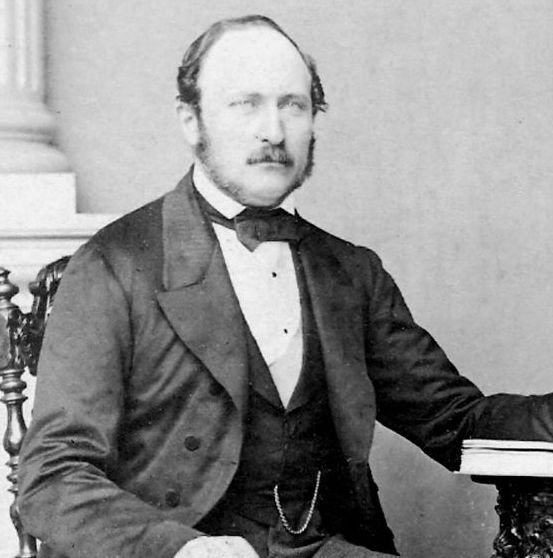
Prince Albert

Prince Albert, husband of Queen Victoria, was born on 26 August 1819 (died 14 December 1861).

In The Crime of the Congo (1909), Arthur Conan Doyle mentions Prince Albert on returning from his journey to the Congo, made one year after Belgium's annexation of the territory.

In the Sherlock Holmes stories, Prince Albert is mentioned three times through the “Albert chain”, a type of pocket-watch chain. Prince Albert popularised the wearing of pocket watches after he and Queen Victoria acquired some of the first “keyless” models (wound by the crown), thereby starting the fashion.

  • Enoch J. Drebber wore a gold Albert chain (STUD).

  • Jabez Wilson wore a heavy brass Albert chain (REDH).

  • Hosmer Angel wore a gold Albert chain (IDEN).

Jane Merrow

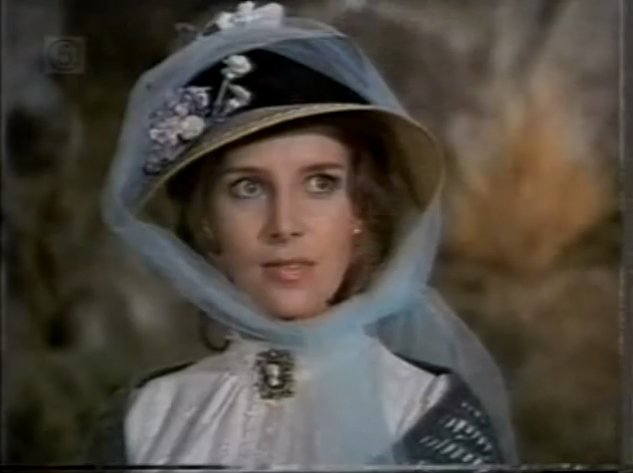
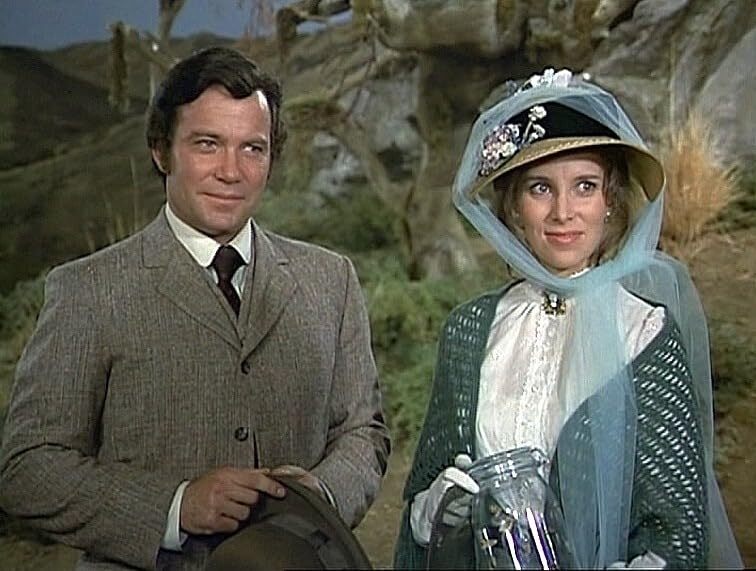
Jane Merrow, the British actress, was born on 26 August 1941. She played Beryl Stapleton in the television version of The Hound of the Baskervilles in 1972 with Stewart Granger (Sherlock Holmes).

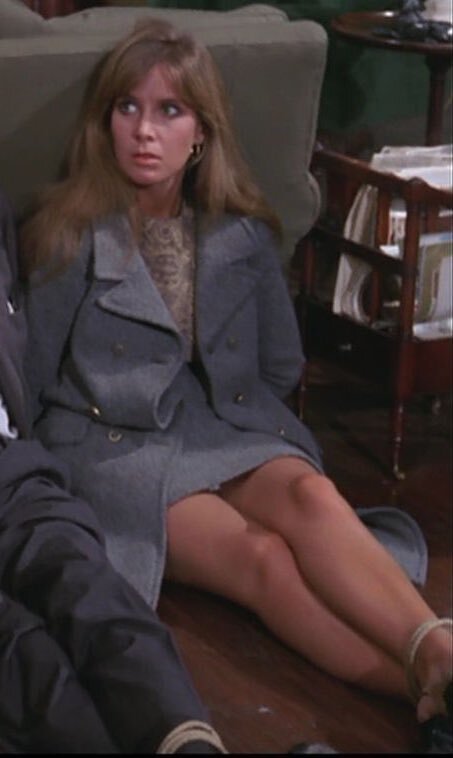
In 1967, in the television series The Avengers, she appeared in the 24th and final episode of season 5, Mission... Highly Improbable, as Susan Rushton. Her performance led to her being considered as a replacement for the departing Diana Rigg, but Linda Thorson was ultimately chosen for the leading role in the following season.

The Doyly Planet is a publication
conceived and produced by Thierry Saint-Joanis

(doyly-planet@sherlock-holmes.fr)
for the Sherlock Holmes Society of France
with the collaboration of Alexis Barquin, Anne Chardon du Ranquet,
Léandre Helbecque and Romain Boucheron.

This publication may contain graphic elements generated by artificial intelligence.

15, rue Grande 03370 Saint-Sauvier

You are receiving this email because you are a member of the association