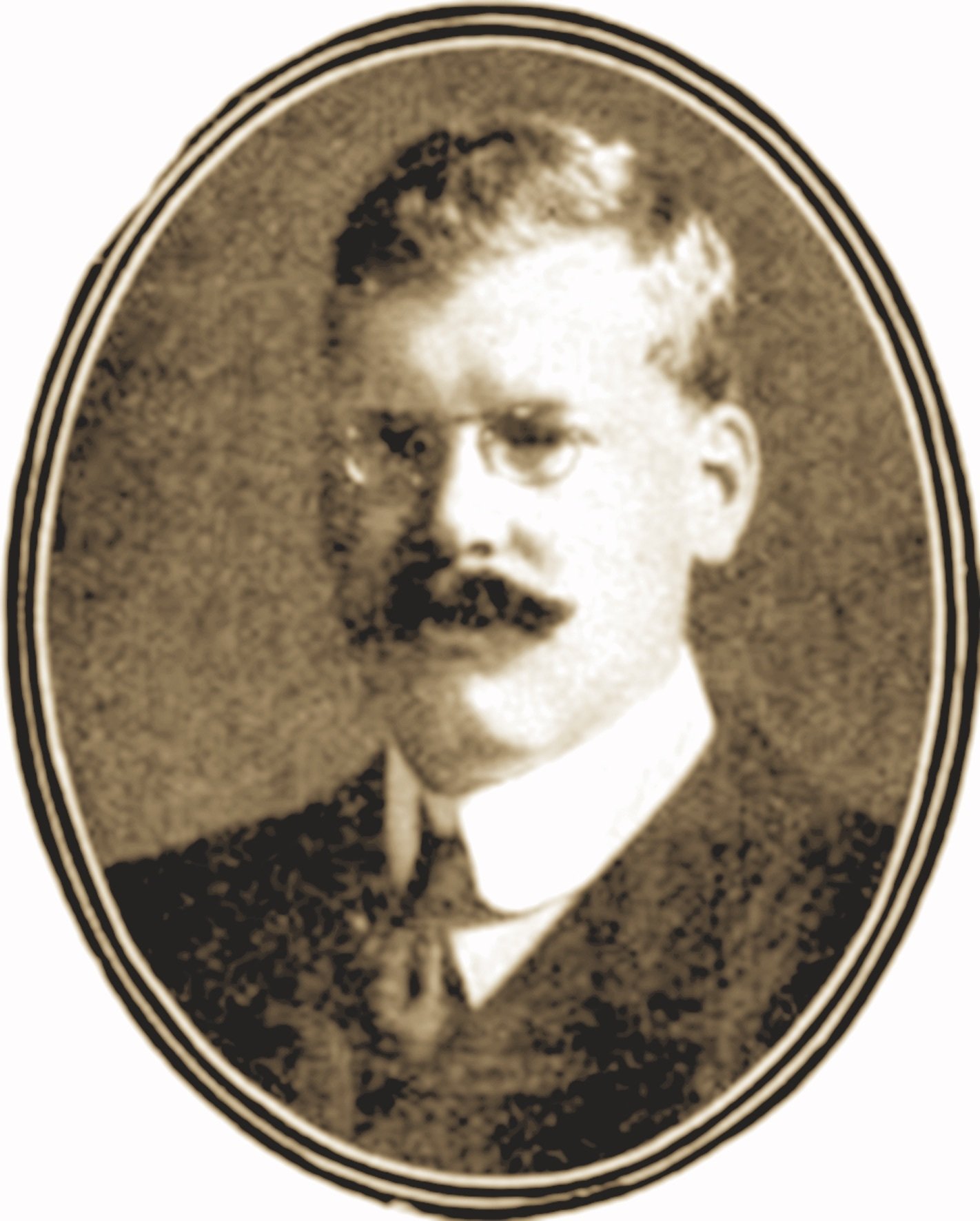
They say there is no smoke without fire. Here, the smoke exists, but we are probably mistaken about the nature of the fire. In April 1901, a publisher, Max Pemberton, had his friend Fletcher Robinson to dinner and told him a legend about a ghostly hound in Norfolk. “A great black dog with eyes that looked like locomotive headlights.” Fletcher Robinson then assured him that a dozen people living on the edge of Dartmoor had seen a ghostly hound. The beast was an enormous coal-black retriever with eyes that glittered like fire.
Fletcher Robinson had always been interested in the paranormal and became enthusiastic about the phenomenon. He was surprised that no novelist had yet written about it. Three days later, he dined with Conan Doyle.
A journalist (J. E. Hodder Williams) later reported that, during his stay in Cromer, Fletcher Robinson had “mentioned in conversation a local legend that fired Conan Doyle's imagination. The two men began to work out a sequence of events, and within only a few hours the plot of a sensational story had been constructed. It was agreed that Conan Doyle would write it.”
The legend said to have fired Conan Doyle's imagination turns out to be that of Black Shuck, which Pemberton had told Robinson over dinner three days earlier. Black Shuck is said to be a large solitary dog with gleaming eyes that roams the Norfolk coast. Some stories say that Black Shuck came up from Cromer beach to nearby Cromer Hall along a path beside the Royal Links Hotel.
While in Cromer, Conan Doyle wrote a letter to his mother in which he noted in a footnote: “Fletcher Robinson came here with me and we are going to write a little book together, The Hound of the Baskervilles, a real creeper.”
Conan Doyle also wrote to Herbert Greenhough Smith, editor of the Strand Magazine, and again described the story as “a real creeper”. He offered it for publication but insisted on one point: “I must do it with my friend Robinson and his name must appear with mine.” He added: “If we come to terms, I shall require as usual my £50 per thousand words for all rights.”
At the beginning of May 1901, Conan Doyle decided that the book needed a dominant central character and reflected: “Why should I invent such a character when I already have him in Sherlock Holmes?” He contacted Greenhough Smith again and proposed a second version of the same novel, this time featuring Sherlock Holmes. Greenhough Smith agreed to pay Conan Doyle £100 per thousand words for the version with Sherlock Holmes.
Conan Doyle also described what he felt on the moor in a letter written from the Duchy Hotel to his mother on Saturday, June 1, 1901:
“My dear Mother,
Here I am in the highest town in England. Robinson and I are exploring the moor together for our Sherlock Holmes adventure. I think it should be a success. I have already written almost half of it. Holmes is at his very best, and he will be supported by a very dramatic plot which I owe to Robinson. After walking more than 20 km across the moor today, we have just returned with a healthy tiredness. It is a fine place, very sad and wild, dotted with prehistoric dwellings, strange monoliths, shelters and graves. There was evidently once a population of several thousand people, but today one can walk all day without meeting a living soul. Abandoned tin mines are everywhere...”
Some witnesses at the time claimed that Fletcher Robinson may have written the opening chapters of the novel. He certainly appears to have made an important contribution to the first two instalments. There are, for example, references to fox hunting and local legends when Mortimer tells Sherlock Holmes the Baskerville story in the second chapter. Then, in Chapter III, Holmes describes to Doctor Watson various fictional places on Dartmoor that are often inspired by real locations. Fletcher Robinson wrote on these subjects, and it must be admitted that his knowledge of them was greater than Conan Doyle's.
On March 25, 1902, The Hound of the Baskervilles was published in book form as a novel by George Newnes, London, one month before publication of the final instalment in the British edition of the Strand Magazine. The first British edition of the book contains the following brief acknowledgement: “My dear Robinson. It was your account of a west-country legend which first suggested the idea of this little tale to my mind. For this and for your help in the details all thanks. Yours very truly, A. Conan Doyle.”
Later, Fletcher Robinson gave copies of the first edition of The Hound of the Baskervilles to the Reverend Robert Duins Cooke, his wife Marion, and Harry Baskerville, the coachman who inspired the surname of the family victimised by the hound. He inscribed each of the three books and twice stated the limit of his involvement in the story as told:
“To the Rev. R. D. Cooke, from the assistant plot-deviser, Bertram Fletcher Robinson.”
“To Mrs Cooke, with best remembrances from the assistant plot-deviser, Bertram Fletcher Robinson.”
“To Harry Baskerville, from B. Fletcher Robinson, with apologies for using your name!”
On April 15, 1902, the novel The Hound of the Baskervilles was also published in book form by McClure, Phillips and Company (New York). In this first American edition, a new version of Conan Doyle's acknowledgement to Fletcher Robinson appears. It was taken down from dictation on January 26, 1902 by Major Charles Terry (Conan Doyle's secretary), and the manuscript is now part of the Berg Collection, held at the New York Public Library. It therefore predates the version in the first British edition.
“My dear Robinson, it was your account of a West-Country legend which first inspired this little tale. For this, and for the help you gave throughout its writing, all my thanks. Yours very truly, A. Conan Doyle.”
As early as October 1901, some American journalists joked about authorship of the novel being wrongly attributed to Conan Doyle. In June 1902, the American edition of The Bookman published a story entitled The Bound of the Astorbilts, written by Charlton Andrews. This first parody of The Hound of the Baskervilles ends with the following paragraph:
“As I looked far out across the moor, the deep, mournful howls of a gigantic hound were heard. The blood-curdling intensity of the cry rose and fell strangely until the inarticulate sound changed into this perfectly audible moan: ‘I wonder how many pages were written by Robinson.’ ”
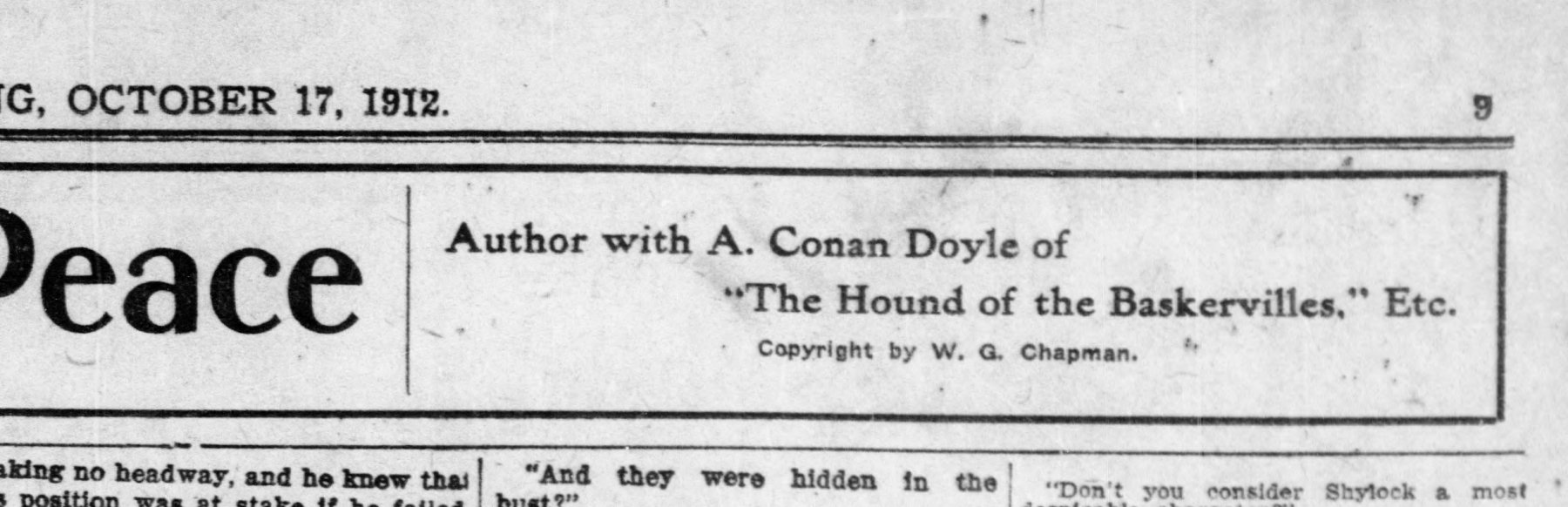
It is doubtful that Robinson bore any resentment after his literary collaboration with Conan Doyle. There is abundant evidence that he considered himself to have reaped the benefits of the association. Several of his short stories were published with an introduction highlighting his participation in the novel The Hound of the Baskervilles (see our illustration above). And Conan Doyle quite clearly encouraged Robinson to promote his own literary works in this way, evidence of the deep respect and friendship between the two men.
In conclusion
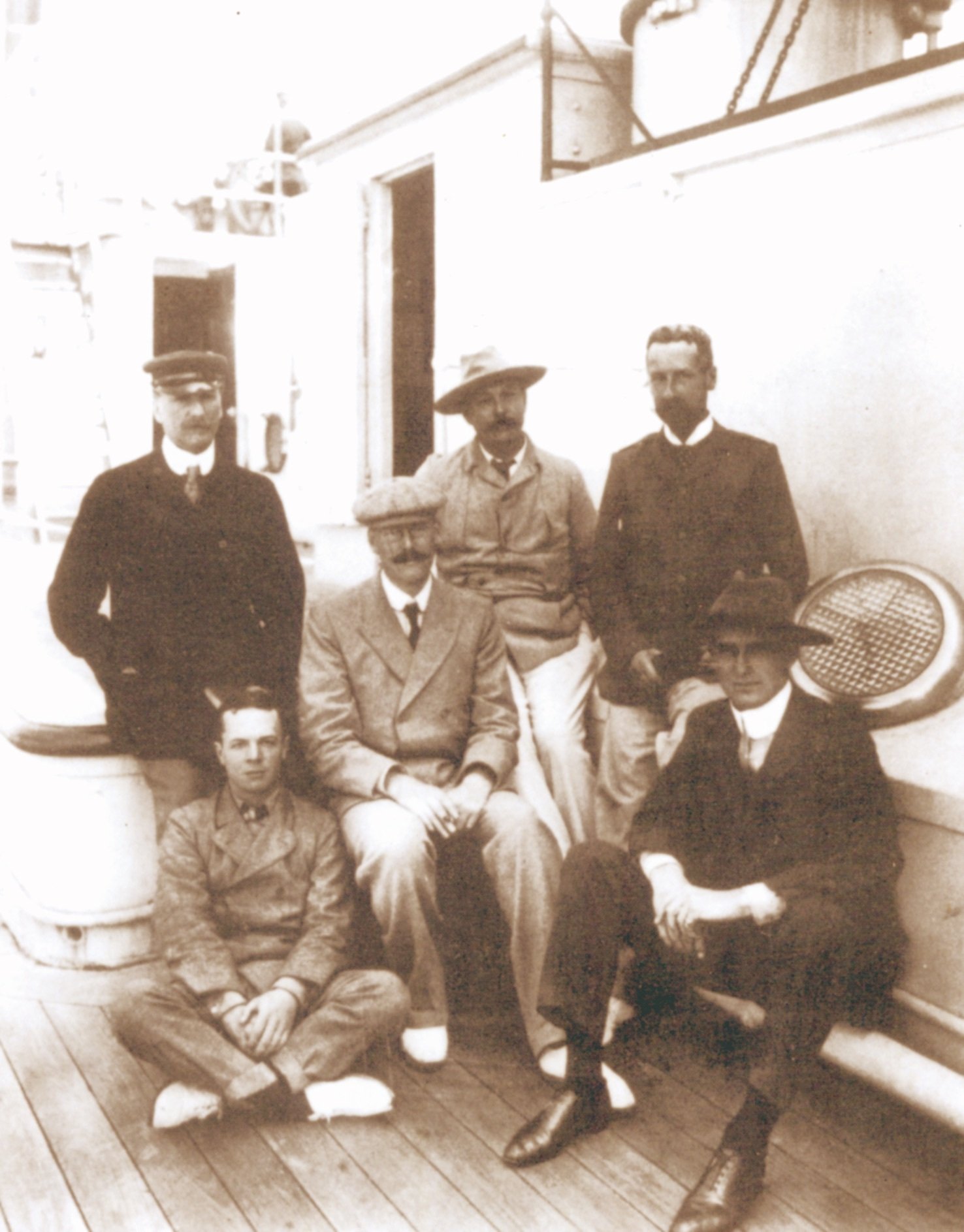
We can therefore consider that Conan Doyle and Fletcher Robinson agreed, while aboard the SS Briton in July 1900, to write together a story set on Dartmoor. The plot was established during a visit to Cromer at the end of April 1901. Soon afterwards, Conan Doyle introduced Sherlock Holmes into it and wrote the beginning of what would become The Hound of the Baskervilles. Between the end of May and the beginning of June 1901, Fletcher Robinson and Conan Doyle carried out field research together in Devon to enrich their story. It was then that the two men agreed that Conan Doyle would write the story alone.
Why did Fletcher Robinson thereafter settle for the simple status of assistant plot-deviser, abandoning that of co-author? We shall probably never know for certain. It is nevertheless entirely conceivable that Fletcher Robinson, recognising that Sherlock Holmes was Conan Doyle's creation, chose to limit his role in the project once the detective became the hero of the story.
Moreover, Fletcher Robinson would have been unable to co-write the story for several professional reasons. Thus, he published fourteen articles in The Daily Express and Pearson’s Magazine during the sixteen weeks in which Conan Doyle wrote The Hound of the Baskervilles (from May to September 1901). In addition, he had been commissioned to write 25,000 words for a book entitled Sporting Pictures, published by Cassell & Company Limited in 1902.
Fletcher Robinson was content simply to assist Conan Doyle with the plot of The Hound of the Baskervilles rather than take part in writing it. Conan Doyle confirmed this in June 1929 when he wrote the following in the preface to a collection of four Sherlock Holmes adventures entitled The Complete Sherlock Holmes Long Stories (London, John Murray):
“Then came The Hound of the Baskervilles, arising from a remark by that great friend Fletcher Robinson, whose premature death was a loss to the whole world. It concerned a phantom hound near his home on Dartmoor. That remark was the starting point of the book, but I must add that the plot and every word of the story are mine.”
Fletcher Robinson nevertheless deserves some recognition for giving Conan Doyle the desire to bring Sherlock Holmes back to life, “killed” in 1894. Conan Doyle went on to write thirty-three short stories and one novel featuring Sherlock Holmes, but none would ever equal the success of The Hound of the Baskervilles.
What irony, when we understand that this novel was not originally intended to be a Baker Street detective adventure, and that the latter became its hero for convenience, sparing the author the need to create a new character, and for financial reasons, since his presence doubled the amount of royalties the publisher had offered to pay.
A final tribute?
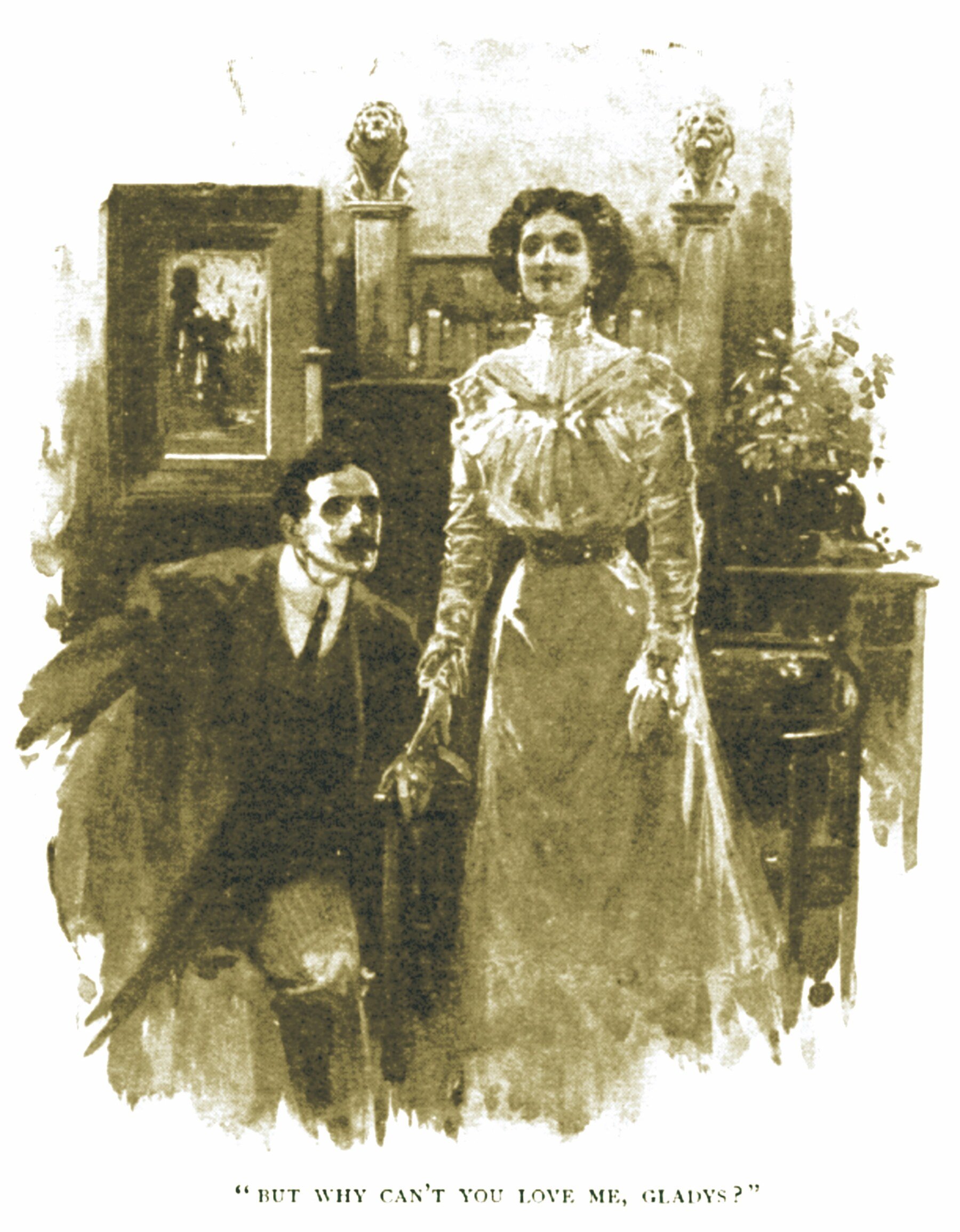
In 1912, Conan Doyle wrote The Lost World, featuring a character named Edward G. Malone. As Brian Pugh and Paul Spiring pointed out in their book “Conan Doyle in Devon”, it is interesting to note the parallels between this character and Fletcher Robinson.
For example, both spent part of their youth in the South-West, enjoyed fishing and stood over six feet tall (about 1.83 m). Both also became accomplished rugby players and London journalists, and both were in love with a woman named Gladys.
The character of Malone may therefore represent Conan Doyle's most enduring tribute to his former “assistant plot-deviser” Robinson...
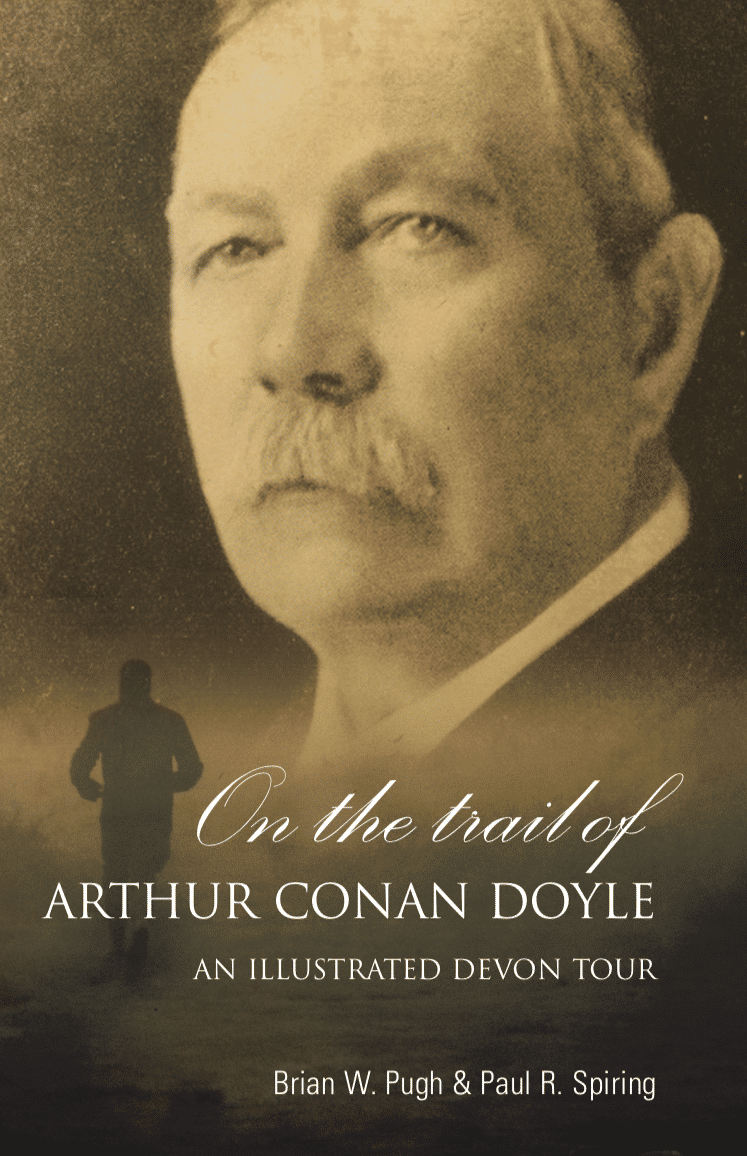
Bibliography: On the Trail of Arthur Conan Doyle: An Illustrated Devon Tour by Brian W. Pugh and Paul R. Spiring, an expanded and annotated French version by Thierry Saint-Joanis, an unpublished project from Mycroft's Brother editions.