Sherlockians have always been rather reserved when it comes to critical discourse about their own practice. They prefer to demonstrate it by example, through meticulous study of the corpus of Sherlock Holmes adventures. Above all, they must not betray the game of make-believe or disown that same game shared by an entire community.
To practise Holmesology is to pretend, to make believe. But pretend what? What kinds of questions do Sherlockians ask of Conan Doyle’s texts? What assumptions and methods do they use in studying those texts? What are the main problems addressed in their scholarly studies?
Our aim is to give readers of The Doyly Planet a brief critical overview of the Holmesological enterprise as it has been practised for more than a century. We will therefore examine:
1) the assumptions that constitute the playful activity of Sherlockian scholars, before considering;
2) the methods and the various problems they study.
We will conclude with:
3) a few general remarks on the history of Holmesology and on what it may perhaps still accomplish.
What is Holmesology?
An attempt at a definition
The term “Holmesology” covers the whole body of scholarly and useless research devoted to the sixty stories by Sir Arthur Conan Doyle recounting the adventures of Sherlock Holmes. At the heart of Holmesology lies the eccentric theory that Sherlock Holmes is not a fictional character but a person who really existed, as did his entire world. Dr Watson’s narratives are read, treated and interpreted as factual accounts of which he is the author.
One of the principles of Sherlockian criticism is therefore this: the complete set of Sherlock Holmes adventures is to be regarded as a historical and fragmentary text (it is incomplete — we do not know everything).
From there, the questions become: what can we infer about it? What can we know about this universe and its participants from the clues supplied by the narrative?
The game played by Holmesologists consists of placing themselves inside the fictional context and talking about what is true according to the story. It means pretending to believe that what the story says is true. They therefore accept that the story does not merely describe fictional characters but very real people whom we can admire, criticise or even psychoanalyse.
The Sherlockian may therefore inscribe on the flyleaf of each volume: the characters in this novel being real, any resemblance to imaginary persons would be purely coincidental (if you have not yet done so, there is still time!).
As Sir Sydney Roberts, a pioneer and one of the giants of the discipline, wrote: “The personalities of Holmes and Watson have such a universal hold on the hearts and imaginations of readers that their lives, habits and characteristics have become an object of greater interest than the adventures they shared.”
The methodological principle accompanying this kind of literary investigation of the Holmes Saga is, of course, to apply Sherlock Holmes’s own methods to it: observation of the details stated within the stories and inference from them. Holmesologists thus conduct systematic, reasoned research intended to be clear, precise and meticulous. They apply the rigour of critical scholarship to their investigations of the entire Holmesian universe. These biographical, chronological and topographical studies generally combine humour with seriousness, since they all begin from a rather unexpected premise.
The existence of Holmes does not trouble Holmesologists. What troubles them instead is the genuine existence of Moriarty and his gang, the internal chronology of the stories, and everything the stories do not tell us — hence the “silly questions”, speculations and finely honed hypotheses devised to account for the many silences, contradictions and implausibilities encountered in the sixty stories.
Holmesology, as practised since its beginnings, is also a culture of dispute, objection, description, burlesque commentary, interpretation and counter-interpretation, and even theoretical construction, partially or completely challenging the truth of particular episodes of the Saga.
All this with solid arguments — or else with a heap of astonishingly far-fetched hypotheses. The common characteristic of all Holmesologists, however, has remained, since the discipline began, their constant disagreement with one another on almost every question raised by their research.
Below, by way of example, is a list of ten controversial questions that have agitated the world of Sherlock Holmes enthusiasts for decades*. These famous questions have inspired dozens of (pseudo-)scholarly studies, each more daring than the last in the solutions proposed:
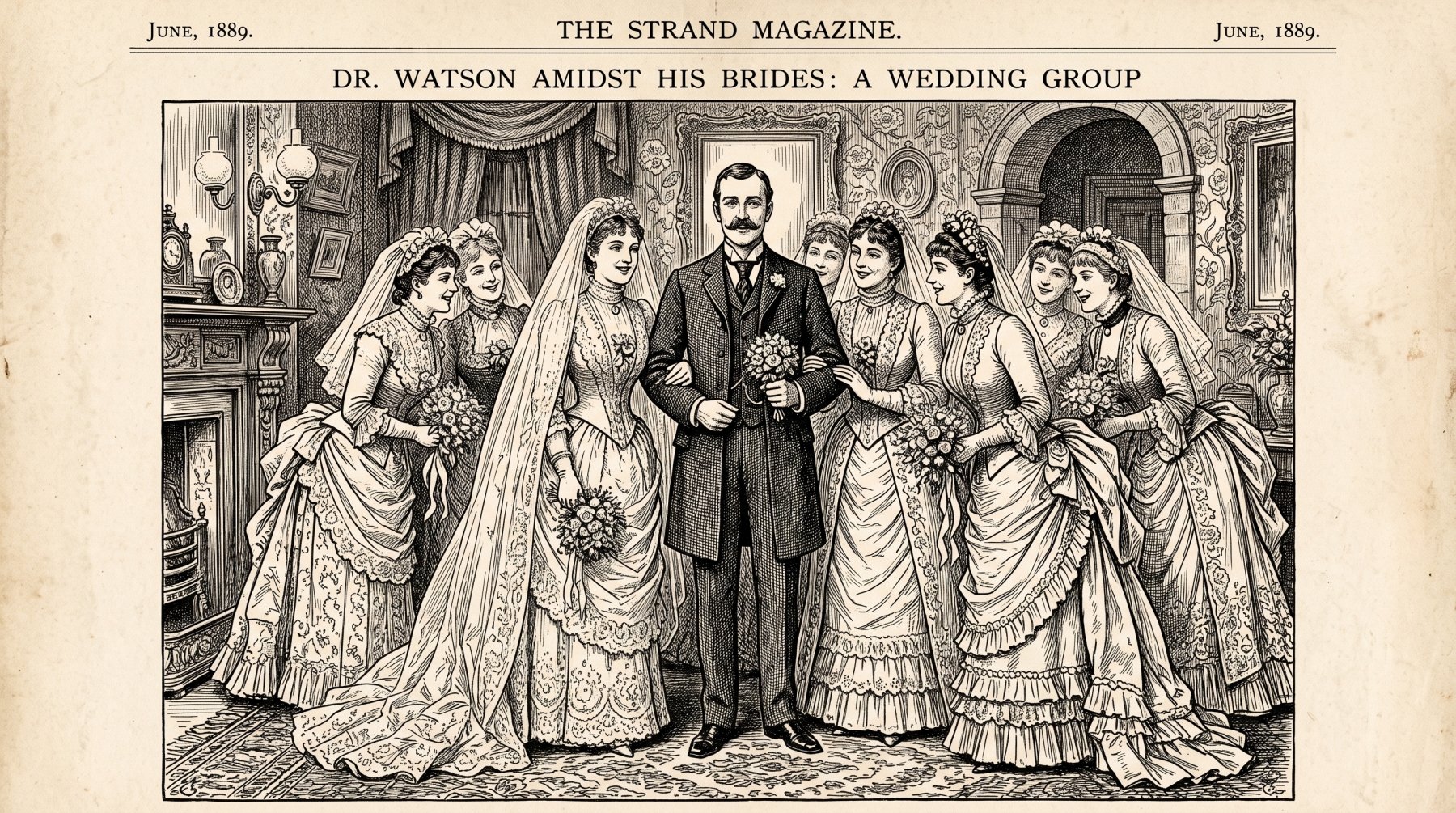
10. How many wives did the good doctor have?
9. Was there a third Holmes brother?
8. Was Holmes in love with Irene Adler?
7. After hearing about snakes that hear, drink and climb, baboons that look like children, a murderous Cyanea capillata (also known as the lion’s mane jellyfish), a writhing greyhound, a cannibal hound “black as coal, a hound such as mortal eyes have never seen,” a giant rat of Sumatra and a species of worm unknown to science, are we really supposed to believe that this detective agency is “on the level” (SUSS)?
6. What is a “bull-pup” (STUD)?
5. What kind of “experience” did Watson have with women “of many nations and of three separate continents” (SIGN)?
4. Did Moriarty exist, or is he an invention of Holmes?
3. What were Sherlock Holmes’s ethical principles?
2. How intelligent was Watson?
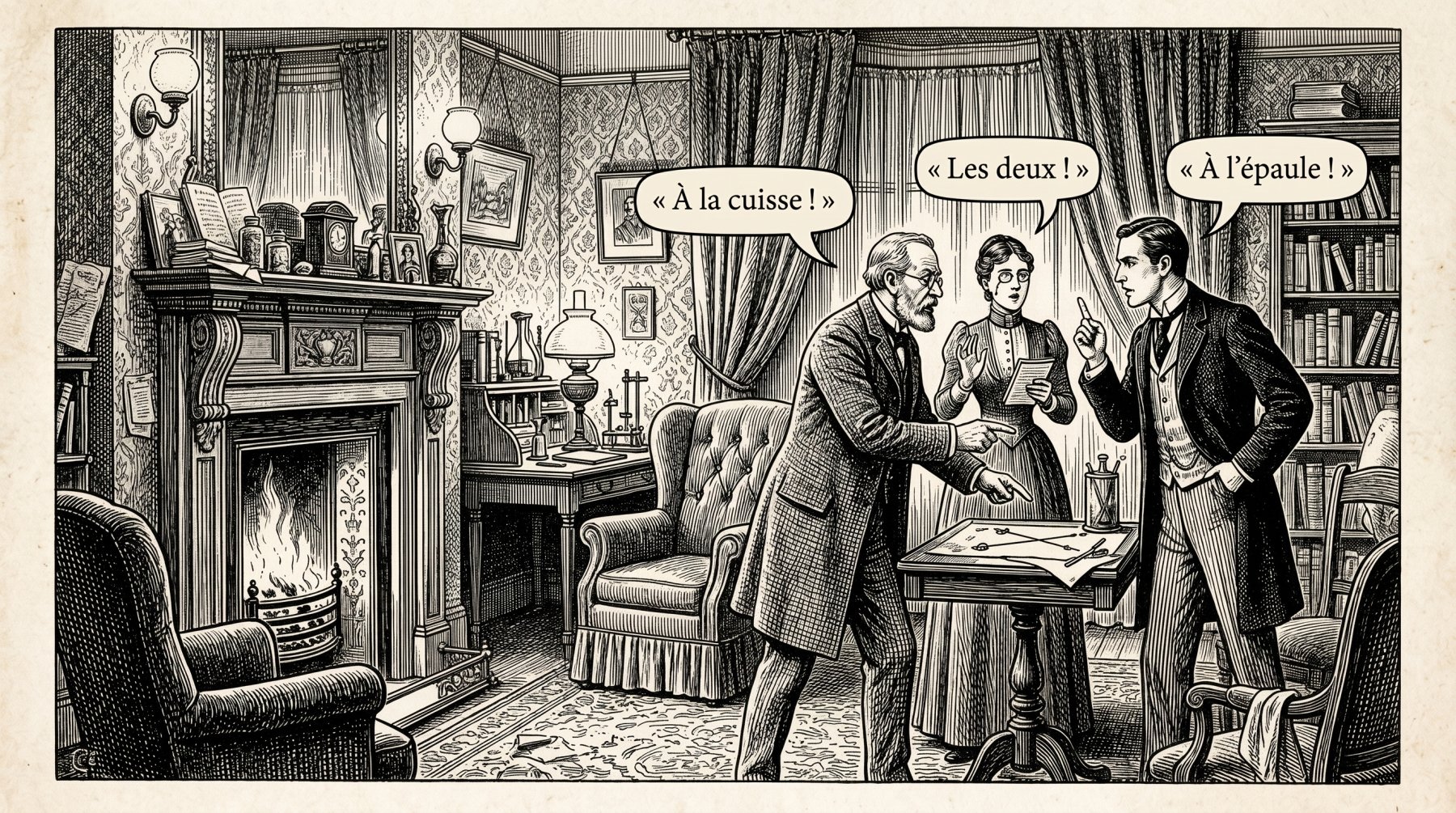
1. For heaven’s sake, where exactly was Watson’s wound?
Many others, already familiar to you, could of course be added. You can start drawing up your own list now and send it to us by email (doyly-planet@sherlock-holmes.fr).
* These ten questions come from a text by Miss Roylott entitled Top Ten Canon Controversies:
(http://kspot.org/holmes/topten.htm).